|
| Chinese Name |
Shanzha |
| Latin |
Fructus Crataegi |
| English Name |
Hawthorn Fruit |
| Key Characteristics |
Herb that relieves food retention. |
| Source |
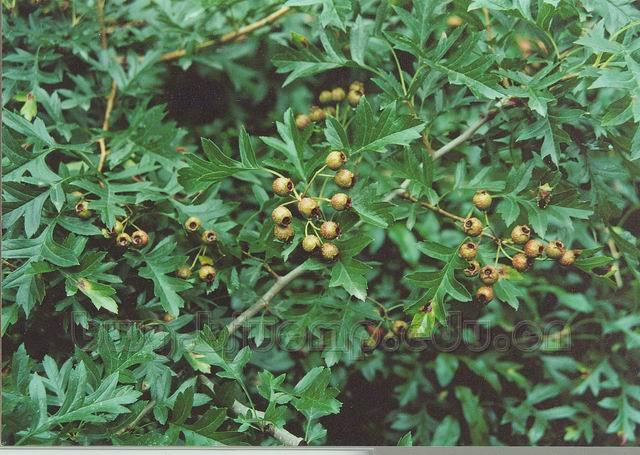
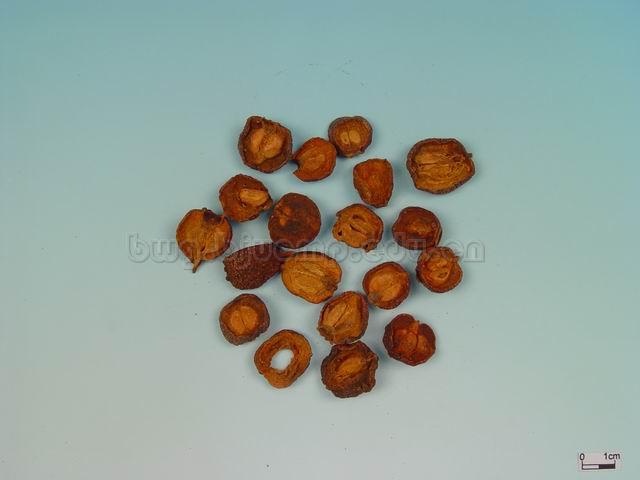
Dried ripe fruit of Crataegus pinnatifiida Bge. Var major N. E. Br., or Crataegus pinnatifida Bge. (Fam. Rosaceae). |
| Property, Flavor and Meridians Entered |
Acrid, sweet, slightly warm; Spleen, Stomach, Liver
|
| Actions |
To promote digestion and the functional activity of the stomach, improve normal flow of qi and dissipate blood stasis |
| Indications |
Epigastric distension due to undigested meat and food, diarrhea and abdominal pain, amenorrhea due to blood stasis, epigastric pain or abdominal colic after childbirth, hernial pain, hyperlipemia, in addition, used for child anorexia, infantile diarrhea, bacillary dysentery, hyperlipemia, hepatitis, polyp of vocal cord, frostbite.
|
| Special Usage |
Unprocessed or dry-fried ones are used to reduce food retention and dissipate stasis, while carbonized ones are used to stop diarrhea.
|
| Precaution |
Use with caution in those with declined function of the spleen and stomach and without food retention. Use with caution in hyperchlorhydria.
|
| Chemical Composition |
It contains flavonoids, organic acids, vitamin, etc.
|
| |
|
|