|
| Chinese Name |
Dihuang |
| Latin |
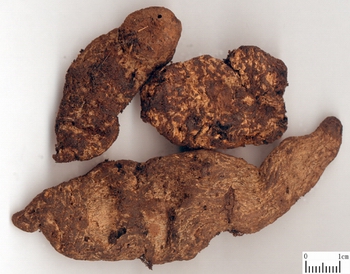
Radix Rehmanniae |
| English Name |
Rehmannia Root |
| Key Characteristics |
Herb that clears heat and cools blood |
| Source |
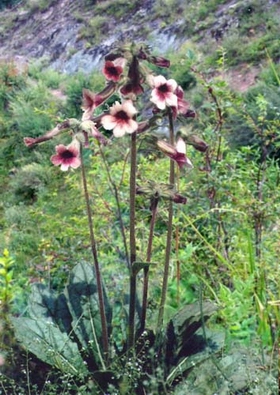
Fresh or dried root of Rehmannia glutinosa Libosch. (Fam. Scophulariaceae) .
|
| Property, Flavor and Meridians Entered |
Sweet, cold; Heart, Liver and Kidney |
| Actions |
Fresh Radix Rehmanniae To remove heat and promote the production of body fluids, reduce blood heat, and arrest bleeding; Dried Radix Rehmanmiae To reduce blood heat, nourish yin and promote the production of body fluids. |
| Indications |
Fresh Radix Rehmanmiae Impairment of yin in febrile diseases marked by deep red tongue and thirst, skin eruptions and maculations, spitting of blood, epistaxis, and sore throat;Dried Radix Rehmanmiae Febrile diseases with deep red tougue and thirst, deficiency of yin with internal heat, consumptive fever, wasting-thirst caused by internal heat, spitting of blood, epistaxis, skin eruptions and maculations, in addition, used for functional uterine bleeding, rheumatism and rheumatic arthritis, Sheehan’s syndrome, eczema, and neurodermitis
|
| Precaution |
It is not suggested to prescribe to those with dampness from spleen deficiency, or those with loose stools and abdominal fullness.
|
| Chemical Composition |
It contains glycosides, sugars, amino acids, etc.
|
| |
|
|