The five elements theory pairs each of the five zang-organs with the corresponding one of the five elements and explains the physiological characteristics and functions of the five zang-organs according to the attributes of the five elements. The liver prefers free extending and bears no stagnation, so it corresponds to wood. Heart yang warms the whole body, so the heart corresponds to fire. The spleen, being the source of qi and blood, transports and transforms food essence to nourish the whole body, so it corresponds to earth. The lung has the purifying and astringent function and lung qi prefers descending, so the lung corresponds to metal. The kidney stores essence and controls water metabolism, so it corresponds to water.
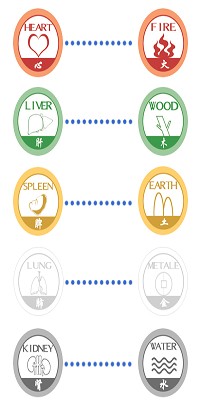
The functions of the five zang-organs are inseparable and correlate with each other.
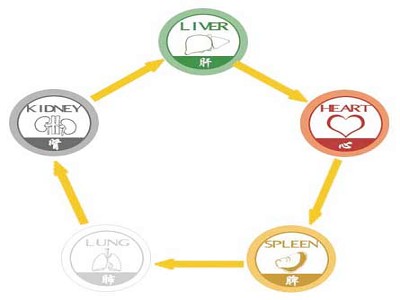
-
In terms of generation, kidney essence nourishes liver yin. The liver stores blood to replenishes heart fire. Heart fire warms the spleen. The spleen transports and transforms food nutrients to nourish the lung. The lung purifies and descends qi to support the kidney.
-
-
-
In terms of mutual restriction, lung qi descends to prevent hyperactivity of liver qi. This is metal restricts wood. Proper dispersal of liver qi relieves stagnation of spleen qi. This is wood restricts earth. The spleen’s transportation and transformation prevents overflow of kidney water. This is earth restricts water. Kidney water moistens the heart to avoid hyperactivity of heart fire. This is water restricts fire. And the heat of heart yang prevents lung qi from over-descending. This is fire restricts metal.