The five elements refer to the five basic substances that constitute the material world, namely wood, fire, earth, metal, water and their movement and transformation in the universe.
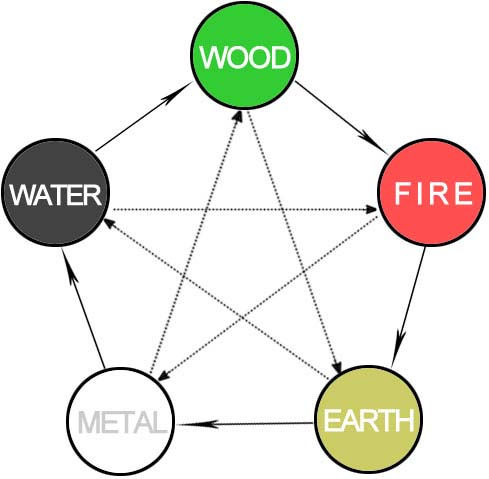
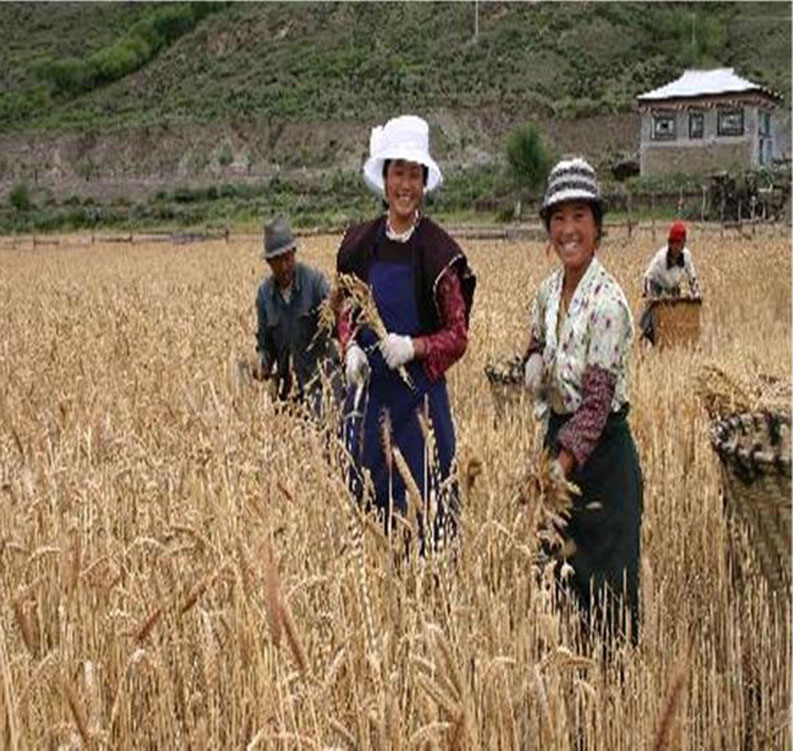
The ancient Chinese believed that wood, fire, earth, metal and water were indispensable to the natural world. These elements have different characteristics but they are closely related rather than separate or isolated. They are mutually promoting and restricting at the same time. The growth and development of natural phenomena is thus activated. Its harmony and balance is thus maintained.This understanding of the theory of the five elements came from abstraction and generalization based on long-time observation of life and practice of farming work. Therefore, the concept of the five elements exceeds the actual substances of wood, fire, earth, metal and water though it is orginated from them. The five elements are abstract concepts, and are more generalized in denotation.
Diagram of the Five Elements
Therefore, the ancient Chinese compared characteristics of natural substances and phenomena with those of the five elements to find out similarities and categorize them. This was done so that further catergorization of related substance and phenomena could be made based on the previous analogy. In this way the complex substances and phenomena in the universe could be catergorized into five related groups. Things that are not apparently associated are then grouped into a united, and related, whole system.
In traditional Chinese medicine, five zang organs are at the center of this catergoriztion. Five tissues, five sensory organs together with emotions and spirits are connected to make a five-element system. The characterics and connections of the five elements are used to explain their features and associations. This system, centered on the five zang organs, enriches the theoretical framework of traditional Chinese medicine.
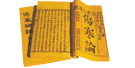
The theory of the five elements is a materistic view applied to Chinese philosophy and traditional Chinese medicine. If the theory of yin-yang is the basis of the building of Chinese medicine, then the theory of five elements is the framework. Nei Jing (Huangdi’s Internal Classic ) applied the theory of the five elements to traditional Chinese medicine and thus facilitated the establishment of a unique theoretical system on the basis of massive clinical experiences.
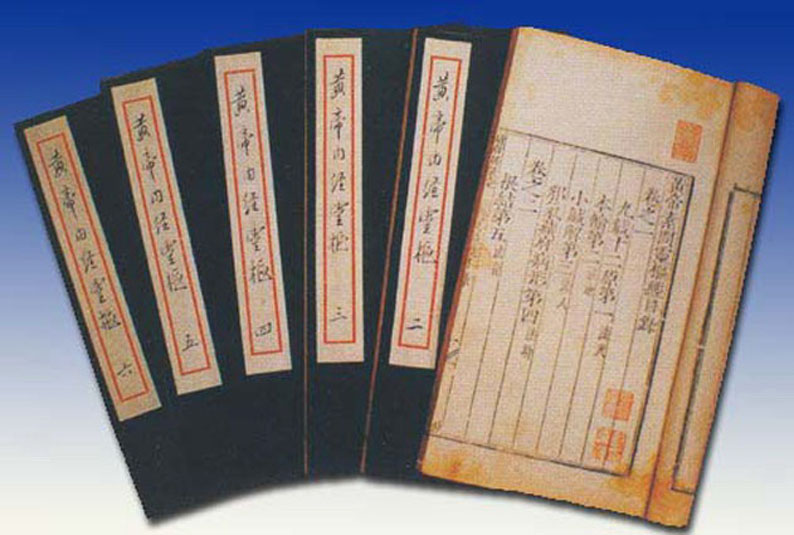
Huang Di Nei Jing ( Huangdi’s Internal Classic )
The relationship and interaction between the five elements are as follows:
wood
Wood: Characterized by growth, germination, stretching and soothing, corresponding with the liver
Metal
Metal: Characterized by descending and astringing, corresponding with the lungs
Water
Water: Characterized by moistening, downwardness, cold and storing, corresponding with the kidney
Earth
Earth: Characterized by transformation, holding and receiving, corresponding with the spleen
Fire
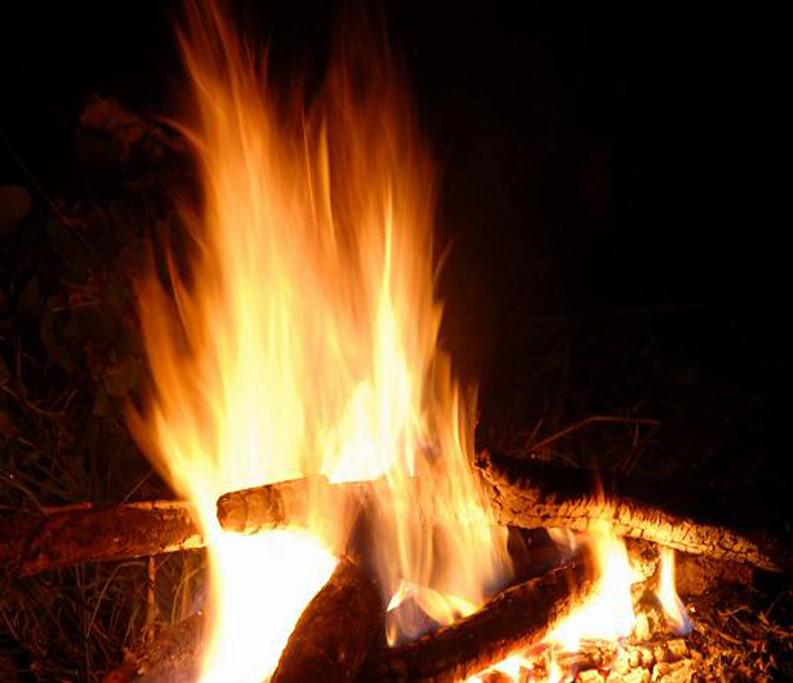
Fire: Characterized by heat and upwardness, corresponding with the heart
Traditional Chinese medicine catergorizes substances and phenomena of nature and human body into five groups based on the analogy of similar property or shape. For example, the liver is wood because anger, the emotion of the liver, is similar to the characteristics of tree wood (the tendency to stretch out freely without being restrained). Wood is green, so green is the color of the liver. Clinically a green complexion is often considered as the manifestation of liver diseases. Eyes are the window of the liver so tears are the fluids of the liver. Such an analogy is continued to estabslish a unique theoretical framework for traditional Chinese medicine. >>More